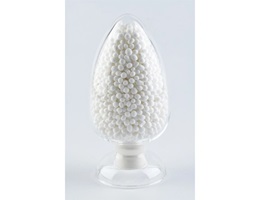
What are you looking for?

The performance of an octadecylsilanized silica gel column depends on much more than whether the silica has been modified with C18 groups. The quality of the bonded surface, pore structure, particle characteristics, material purity, and consistency between production batches all influence how the stationary phase behaves during separation.
This distinction matters when chromatography moves beyond a simple laboratory trial. A material that produces acceptable separation in a small test may behave differently when sample complexity, loading volume, or processing scale increases. For buyers selecting silica gel for preparative chromatography, evaluating the underlying material is therefore just as important as confirming that it is octadecylsilanized.
Octadecylsilanization modifies the naturally polar surface of silica by attaching long C18 hydrocarbon chains. The resulting stationary phase becomes strongly hydrophobic, allowing compounds to be separated according to differences in their interaction with the bonded surface.
The effectiveness of this modification has a direct effect on chromatographic behavior. If bonding is uneven, different areas of the silica surface may not interact with the sample consistently. Residual silanol groups can also remain after modification. These polar sites may create unwanted secondary interactions, particularly with compounds that are sensitive to surface activity.
This is one reason base-deactivated silica is relevant in demanding separation work. Reducing undesirable surface activity can help the stationary phase behave more predictably when separating complex organic mixtures.
For buyers, the important question is therefore not simply whether a material is labeled “C18.” It is whether the surface treatment is sufficiently controlled for the intended separation.
A chromatographic stationary phase works only when target molecules can reach the active surface inside the silica particles. Pore structure determines how easily this happens.
Larger molecules require enough internal space to enter the porous network and interact with the C18-bonded surface. If the pore system restricts molecular access, part of the available surface may contribute little to the actual separation. For smaller compounds, other pore structures may be suitable depending on the process and desired selectivity.
Siliplus' current Column Chromatography Silica Gel 100Å grade is specified with a pore diameter of 80–100Å, a pore volume of 0.8–1.0 ml/g, and a surface area of 320–420 m²/g. These values should be considered together rather than independently because they describe different aspects of the porous structure.
| Property | Why It Matters in Chromatography |
|---|---|
| Surface modification | Determines the hydrophobic interaction provided by the C18 phase |
| Pore structure | Influences whether molecules can access the internal surface |
| Surface area | Affects the amount of available interaction area |
| Particle size | Influences packing behavior, flow resistance, and separation efficiency |
| Batch consistency | Helps maintain comparable behavior between production runs |
A nominal pore-size description alone does not tell the whole story. When evaluating an octadecylsilanized silica gel column, buyers should consider whether the complete pore structure suits the molecular size and separation objective of the application.
Particle size affects how silica packs inside a column and how the mobile phase moves through the stationary bed.
Smaller and more uniform particles can create a more consistent packed structure, but they may also increase resistance to flow. Larger particles can reduce that resistance but may change separation efficiency. The appropriate balance depends on the column format, sample loading, processing speed, and degree of resolution required.
Siliplus currently lists several particle-size ranges for its 100Å column chromatography silica gel, including 40–63 μm, 50–75 μm, 70–150 μm, and 60–200 μm. These options illustrate why buyers should specify the separation process rather than choosing solely by the broad product name.
This becomes especially important in preparative work. A change in particle distribution can alter packing density and solvent flow, which may affect how easily an established process can be reproduced at another scale.
Companies comparing chromatography materials can review the broader Siliplus silica gel product range to understand how different silica structures are positioned for different applications.
A chromatography process must often perform repeatedly, not just once. This makes material consistency particularly important.
Variation in silica structure, surface treatment, moisture condition, or impurities can change the way compounds interact with the stationary phase. Even when two batches carry the same nominal specification, uncontrolled variation can produce differences in retention behavior or separation quality.
For this reason, chromatography buyers should evaluate how critical properties are controlled from one production batch to another. The more sensitive the purification process, the more important this becomes.
Instead of focusing only on a specification sheet, it is useful to validate a representative sample under the actual solvent system and sample conditions before moving into larger-volume purchasing. This gives the buyer a practical indication of whether the selected material can maintain the required separation behavior.
For an octadecylsilanized silica gel column used in pharmaceutical intermediates, natural-product purification, pigments, or other complex mixtures, predictable material quality can be more valuable than optimizing one isolated specification.
There is no single octadecylsilanized silica gel that is automatically best for every chromatographic process. Performance depends on how well the stationary phase matches the compounds being separated and the conditions under which the column will operate.
The starting point should therefore be the actual separation problem. Molecular size helps determine whether the pore structure provides sufficient access, while sample chemistry affects how strongly compounds interact with the C18-bonded surface. Particle size then needs to suit the required balance between flow and separation efficiency.
This application-first approach also makes supplier communication more productive. Instead of requesting “C18 silica gel” alone, buyers can provide information about the sample, solvent system, target separation, current silica grade, and any difficulties observed during processing. A supplier can then evaluate whether an existing grade is suitable or whether another specification should be considered.
Siliplus supplies column chromatography silica gel for separation and purification applications and can discuss material selection according to specific process requirements. If you are evaluating an octadecylsilanized silica gel column material for a new process or replacing an existing silica grade, contact Siliplus with your application details for further evaluation.
The performance of an octadecylsilanized silica gel column is determined by the complete stationary-phase structure rather than the C18 designation alone. Surface bonding controls hydrophobic interaction, pore structure determines access to the internal surface, and particle characteristics influence how the silica behaves after packing. Consistency between batches then determines whether those characteristics can be maintained during repeated production.
For practical selection, the best approach is to compare silica properties against the actual compounds, solvent system, loading conditions, and required separation result. Testing the selected grade under real process conditions before scale-up can reduce uncertainty and make subsequent purchasing decisions more reliable.
Octadecylsilanized silica gel is silica whose surface has been modified with C18 hydrocarbon groups. The modification creates a hydrophobic stationary phase commonly used for reversed-phase chromatographic separation.
Yes. Pore size affects how easily molecules can enter the silica structure and reach the bonded surface. The appropriate pore structure depends largely on the size and characteristics of the compounds being separated.
Particle size influences packing uniformity, solvent flow, and separation efficiency. The appropriate size should match the column configuration and the required balance between resolution and processing speed.
For process-sensitive or scale-up applications, sample validation is recommended. Testing under the actual sample and solvent conditions helps confirm that the selected silica grade produces the required separation behavior before larger-volume purchasing.