What are you looking for?

In industrial desiccant and separation technologies, porous materials are typically categorized by their extreme behaviors. Standard commercial options usually force engineers to choose between narrow-pore matrices optimized for aggressive low-humidity drying, or wide-pore networks built for large volume clearance. However, a vast array of industrial applications requires a more balanced, adaptive approach to adsorption.
This is where type B silica gel becomes indispensable. Functioning as a structural bridge, it occupies the crucial middle ground between fine-pored and wide-pored alternatives. Its unique internal matrix—frequently referred to as a mid-pore architecture—provides a distinct thermodynamic profile that handles transitional environmental conditions with exceptional efficiency. Understanding how this mid-pore setup operates allows process engineers, material procurement managers, and product developers to optimize workflows that traditional desiccants simply cannot support.
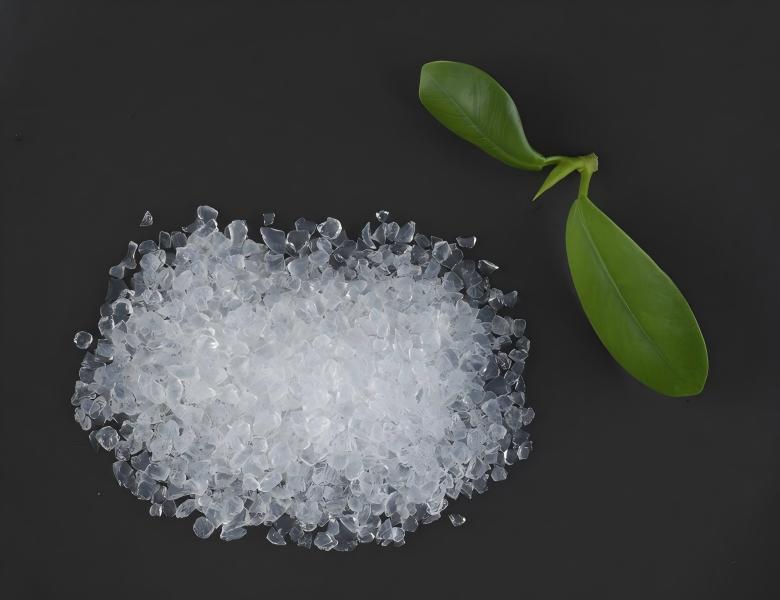
To understand silica gel type B, one must look at its physical microstructure. Standard synthetic silica gel is a highly porous form of silicon dioxide (SiO2) constructed of microscopic, interconnected chambers. The size of these chambers determines how vapor molecules condense and settle inside the bead.
While narrow-pore variants feature tight pore networks, type B silica gel is engineered with a precisely controlled average pore diameter ranging from 4.5 to 7.0 nanometers. This mid-pore channel configuration fundamentally alters the material's structural parameters:
Pore Volume: It maintains a spacious pore volume typically measuring between 0.60 and 0.85 milliliters per gram (mL/g).
Specific Surface Area: Because the pores are larger than fine-pored desiccants, the internal wall surface area shifts to a moderate range, usually settling between 400 to 500 square meters per gram (m²/g).
The Transitional Advantage: This specific balance of surface area and physical volume means that the material does not instantly choke or saturate when exposed to sudden vapor surges, nor does it remain inactive at moderate humidity levels. Instead, it offers a predictable, highly controllable capillary condensation curve.
The transitional physical properties of silica gel type B translate into remarkable versatility across specialized B2B industrial sectors. Rather than acting as a simple, disposable moisture absorber, it serves as an active, structural component in complex systems.
Unlike standard drying agents that blindly strip moisture until dry, type B silica gel acts as a true humidity regulator or buffering agent. Due to its mid-pore structure, it absorbs immense moisture at high relative humidity (RH) levels but naturally and predictably releases that moisture when the surrounding atmosphere becomes excessively dry. This two-way equilibrium management makes it the premier raw material for precision humidity regulators utilized in museums, specialized archival storage, and automated environmental chambers.
In the petrochemical and chemical synthesis industries, catalysts require solid, highly stable supports to maximize reaction efficiency. The mid-pore architecture provides an exceptional physical foundation. It provides a generous surface area for uniform precious metal or chemical catalyst dispersion, while its 4.5 to 7.0 nanometer channels ensure that reactant and product molecules flow freely through the bed without creating localized mass transfer blockages.
Beyond structural applications, this material serves as an excellent starting point for chromatographic separations. The medium-sized pore openings allow raw material processing laboratories to separate transitional chemical compounds that are too large for tight analytical phases but too small for massive size-exclusion macro-matrices.
Selecting the perfect porous media requires a clear breakdown of physical metrics. Below is a concise comparison displaying where silica gel type B sits within the standard technical hierarchy:
| Technical Parameter | Type A (Narrow-Pore) | Type B (Mid-Pore) | Type C (Wide-Pore) |
|---|---|---|---|
| Average Pore Diameter | 2.0 – 3.0 nm | 4.5 – 7.0 nm | 8.0 – 10.0 nm |
| Pore Volume Capacity | 0.35 – 0.45 mL/g | 0.60 – 0.85 mL/g | 0.80 – 1.10 mL/g |
| Specific Surface Area | 600 – 800 m²/g | 400 – 500 m²/g | 300 – 400 m²/g |
| Primary Desiccant Behavior | Aggressive static drying | Dynamic humidity buffering | Liquid water reconditioning |
| Peak Performance Range | Low humidity (< 40% RH) | Moderate to High (40% – 80% RH) | High humidity / Condensation |
| Core Industrial Uses | Electronics packaging, gas drying | Automated regulators, catalyst beds | Gas separation, liquid absorption |
To review our complete inventory of industrial-grade beads, mesh specifications, and packaging styles, explore the Siliplus Products Structural Catalog.
Because type B silica gel functions in precision environments like active chemical reaction beds and automated buffering equipment, structural consistency is paramount. If a manufacturer allows the internal pore diameters to drift too low, the material will behave like Type A silica, saturating prematurely. If the pores drift too wide, it loses its structural buffering capability entirely.
At Qingdao Siliplus Chemical Industry Co., Ltd., we eliminate this performance volatility through state-of-the-art process control. Our production facilities manage every variable along the chemical pathway—from the initial acidification and gelation of high-purity sodium silicate to the precise temperature curves applied during final bead activation and dehydration.
As a trusted global supplier with a robust annual production capacity of 55,000 tons, we subject every production batch to rigorous micro-structural testing. We thoroughly verify pore size symmetry, crush resistance, and uniform particle size distribution to ensure that our materials deliver reproducible adsorption rates on your factory floor.
When engineering complex industrial systems, specifying the exact material characteristics determines your long-term operational costs and product reliability. Type B silica gel eliminates the rigid compromises of extreme pore sizes, delivering a versatile mid-pore architecture that excels at dynamic humidity regulation, high-throughput catalyst support, and specialized chromatographic separation.
Partnering with a dedicated manufacturer ensures your supply chain remains secure and technically supported. Siliplus provides an extensive range of high-purity standard and customized silica solutions designed to meet strict international entry requirements. Whether you require specific mesh distribution profiles, custom pore adjustments, or volume validation samples for pilot testing, our engineering team is ready to assist. Contact our technical advisory team directly through the Siliplus Official Contact Page to secure a professional consultation and a customized wholesale quote.
Standard commercial desiccants are typically Type A (narrow-pore), designed to quickly lock away small amounts of moisture in sealed packaging. Silica gel type B features wider mid-pore channels, allowing it to act as a dynamic, two-way humidity buffer that both absorbs and releases moisture to maintain a balanced target environment.
Yes. The material features excellent thermal and mechanical stability. It can be regenerated by heating it to a specified activation temperature to drive off trapped moisture, restoring its full mid-pore adsorption capacity without breaking down the physical structure of the beads.
If the pore distribution is uneven, areas with restricted pores will trap reactant molecules, leading to side reactions, localized overheating, or premature catalyst deactivation. Siliplus ensures tight pore symmetry so that chemical reactants move uniformly across the entire catalyst surface.
Absolutely. Our high-purity synthetic silica is chemically inert, non-toxic, and free from heavy metal indicators like cobalt chloride. This makes it completely safe for indoor air regulators, climate-controlled museum showcases, and pharmaceutical facility climate management.