What are you looking for?

In liquid chromatography, selecting the correct stationary phase is the defining factor between a sharp, highly pure yield and a failed separation. While parameters like particle size and mesh specifications dictate the flow rate and backpressure, it is the micro-pore structure that governs the thermodynamic interactions between your sample and the stationary phase.
Column chromatography silica gel works on a fundamental principle: utilizing the duration time difference of absorption to different substances to separate and purify complex mixtures. The pore size, measured in Angstroms (Å), determines the accessible internal surface area available to target molecules. Choosing between a narrower pore like 60Å and a wider channel like 100Å changes how mass transfer occurs inside the silica matrix. Selecting the wrong pore size can result in size-exclusion blockages, dead adsorption, or poor resolution, costing pharmaceutical and chemical laboratories valuable time and materials.
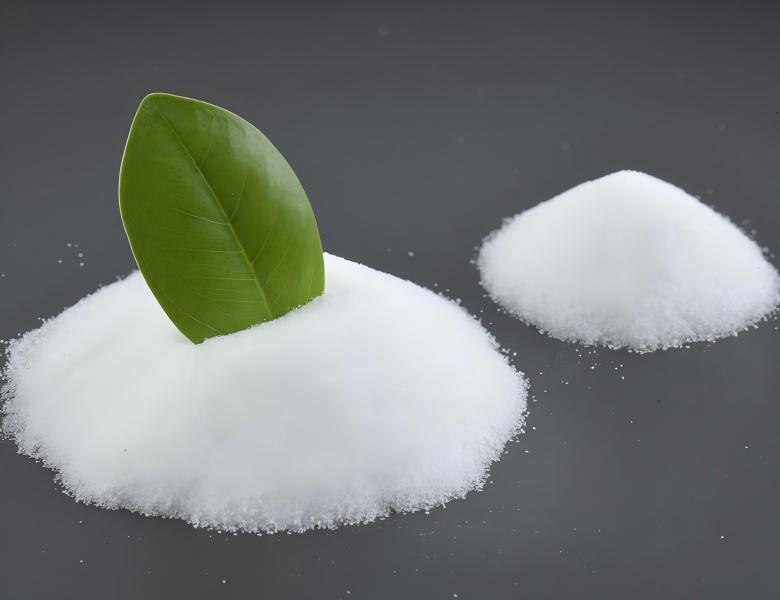
Column chromatography silica gel 60Å is one of the most widely utilized stationary phases in global laboratories and scaling production lines. Structurally, a 60Å pore diameter translates to roughly 6 nanometers of clearance within the inner channels of the silica particle.
Because the pores are smaller, the structural matrix accommodates a significantly higher density of pore walls. This results in an exceptionally high specific surface area, typically ranging between 450 to 550 square meters per gram (m²/g). This vast surface area is covered with active silanol groups (Si-OH), offering maximum binding capacity per gram of media. When packing columns, industries often utilize standard mesh cuts, such as the popular silica gel 60 for column chromatography 120 mesh, to balance this intense adsorptive capacity with optimal column flow mechanics.
Thanks to its massive surface area and compact pore structure, 60Å silica gel excels at resolving low-molecular-weight compounds (typically under 4,000 Daltons).
Active Pharmaceutical Ingredients (APIs): It serves as the industry workhorse for the isolation, purification, and preparation of high-purity substances of active ingredients of APIs.
Natural Product Isolation: It is extensively deployed in purifying the effective compositions of Chinese herbal medicine, including small-molecule alkaloids, flavonoids, and quinones.
Isomer Separation: Because different substances exhibit micro-differences in their steric hindrance and polar adsorption, experienced column chromatography silica gel manufacturers can fine-tune these media to accurately separate and purify closely related isomers.
Target Compounds: Industry staples such as the heart-protecting drug coenzyme Q10, the anti-cancer drug paclitaxel, and the organ transplant anti-rejection drug cyclosporin rely heavily on high-purity 60Å silica gel systems for their active ingredient isolation.
As target molecules grow in structural complexity and molecular weight, the narrow 6nm channels of a 60Å matrix become restrictive. This is where column chromatography silica gel 100Å becomes essential.
With a pore diameter of 100Å (approximately 10 nanometers), this media features significantly wider internal channels. To achieve these larger structural cavities, the internal wall density is reduced, resulting in a lower specific surface area than 60Å media, usually clustering around 300 to 400 square meters per gram (m²/g). However, this trade-off is mathematically necessary. The wider 100Å channel eliminates the risk of restricted mass transfer, allowing bulkier, three-dimensional molecular structures to diffuse freely into the pore networks, interact completely with the bonded or bare surface, and elute without causing mechanical clogging or peak tailing.
The 100Å pore structure shifts the application focus from small organic molecules to larger macromolecular complexes and biomolecules.
Proteins and Antibodies: It is primarily utilized for the purification of proteins and antibodies, achieving highly selective adsorption and elution based on the unique spatial and charge characteristics of biological macromolecules.
Peptides and Oligonucleotides: Synthetic peptides and long-chain oligonucleotides that would otherwise bypass or clog a 60Å matrix are cleanly separated using 100Å media.
Advanced Stationary Phases: This 100Å pore architecture is widely used as the preferred base matrix for advanced surface modifications. By grafting specialized functional groups onto this larger framework, manufacturers produce elite materials like base-deactivated octadecylsilyl (C18) silica gel and phenyl silyl silica gel HPLC column materials, perfectly optimized for large-molecule reverse-phase chromatography.
To optimize your procurement and method development, it is vital to contrast these two media across their primary technical baselines:
| Technical Parameter / Feature | Silica Gel 60Å | Silica Gel 100Å |
|---|---|---|
| Average Pore Diameter | 60Å (6 nm) | 100Å (10 nm) |
| Typical Specific Surface Area | 450 – 550 m²/g | 300 – 400 m²/g |
| Optimal Molecular Weight Range | Small molecules (< 4,000 Da) | Macromolecules / Biomolecules (> 4,000 Da) |
| Primary Separation Mechanism | High-capacity polar adsorption | Size-accessible mass transfer & elution |
| Common Target Analytes | Synthetic APIs, isomers, herbal extracts, plant pigments | Target proteins, monoclonal antibodies, large peptides |
| Advanced Base Compatibility | Standard ODS / C18 applications | Base-deactivated ODS 100Å, Phenyl-silyl phases |
Explore our complete catalog of structural specifications on our Siliplus Products Navigation Page.
The success of pilot-plant scaling and commercial pharmaceutical manufacturing depends heavily on batch-to-batch reproducibility. Because silica gel possesses high surface activity, minor deviations in the manufacturing environment can drastically alter your retention times.
When auditing column chromatography silica gel manufacturers, procurement teams and chemical engineers must look past basic pricing and verify the manufacturer’s rigorous quality control metrics over five critical structural parameters:
Surface Chemical Composition: High-purity silica must minimize trace metal impurities (such as iron, aluminum, and sodium). Residual metals create hyper-reactive lewis acid sites that cause irreversible binding and severe peak tailing, especially for basic compounds.
Particle Size Distribution (PSD): Whether you are performing gravity filtration or flash silica gel column chromatography, a tight, symmetrical particle size distribution prevents column channeling and unexpected backpressure spikes.
Pore Volume and Capacity: Stable pore volumes ensure consistent solvent consumption and predictable loading capacities during large-scale industrial runs.
Pore Size Symmetry: Reliable manufacturers ensure that the pore size distribution forms a tight Gaussian curve around the target baseline (60Å or 100Å), preventing unexpected size-exclusion effects.
Mechanical Stability: Premium silica beads must withstand high packing pressures without fracturing into fine dust, which can clog column frits and ruin system hydraulics.
At Siliplus, we maintain strict control over the entire production chain—from the raw formulation of sodium silicate to deep surface processing. Every single batch undergoes validation of silica gel mesh size for column chromatography to guarantee that your laboratory trials replicate perfectly on the industrial factory floor.
Choosing between 60Å and 100Å column chromatography silica gel ultimately comes down to the molecular weight and structural complexity of your target analyte.
Choose Silica Gel 60Å if you are processing low-molecular-weight APIs, separating complex chemical isomers, or refining industrial oil products to remove aromatic hydrocarbons. Its superior surface area guarantees maximum loading capacity and sharp resolution for small molecules.
Choose Silica Gel 100Å if your workflow centers on biological macromolecules, target proteins, therapeutic antibodies, or large-chain synthetic peptides. Its expanded 10-nanometer channels provide the required spatial clearance to prevent column fouling while ensuring smooth mass transfer.
As an industry-leading manufacturer with an annual production capacity of 55,000 tons, Siliplus delivers globally certified, high-purity standard and customized silica solutions tailored to your unique specifications. If you require custom pore modifications, specific mesh size cuts, or bulk validation samples, reach out directly to our technical support team through the Siliplus Contact Page to receive an expert consultation and a tailored quote.
Generally, no. Proteins are large biological macromolecules that exceed the physical clearance of 60Å pores, leading to restricted diffusion, sample exclusion, or severe column blockages. 100Å or larger pore media are highly recommended for protein purification.
Smaller pores allow for a denser arrangement of internal pore walls within the same volume of a silica particle. This structural density yields a higher specific surface area per gram compared to wider-pore matrices like 100Å.
While small molecules will easily enter 100Å pores without clogging, the lower specific surface area means fewer available interaction sites. This can reduce total loading capacity and potentially lead to lower resolution compared to a dedicated 60Å matrix.
Trace metals act as active chelating sites that bind strongly to polar organic compounds, especially basic pharmaceutical ingredients. This results in irreversible sample loss, distorted peak shapes (tailing), and poor batch-to-batch reproducibility.